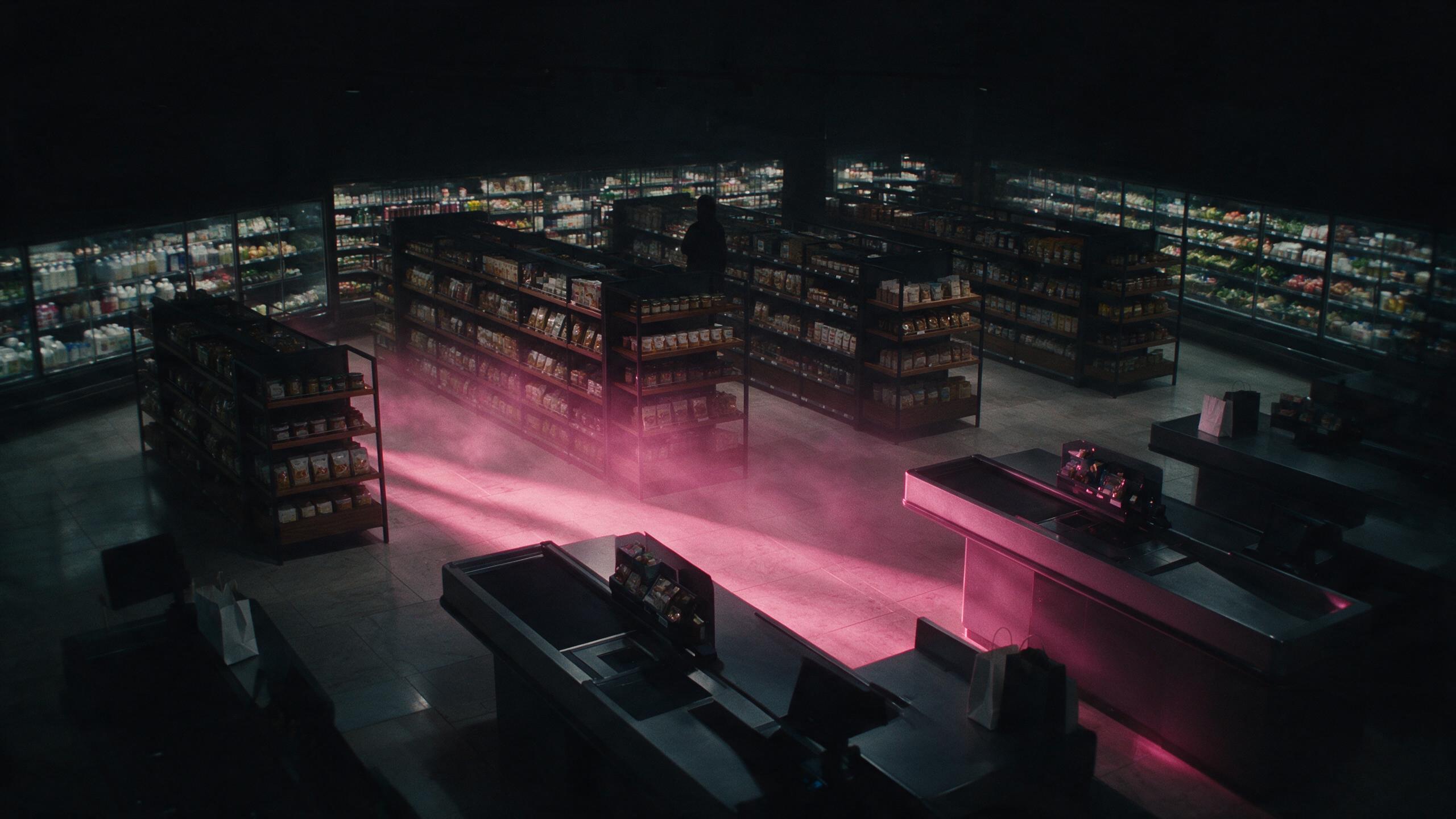
From checkout to receiving, supermarket fraud shows up with the transaction beside it.
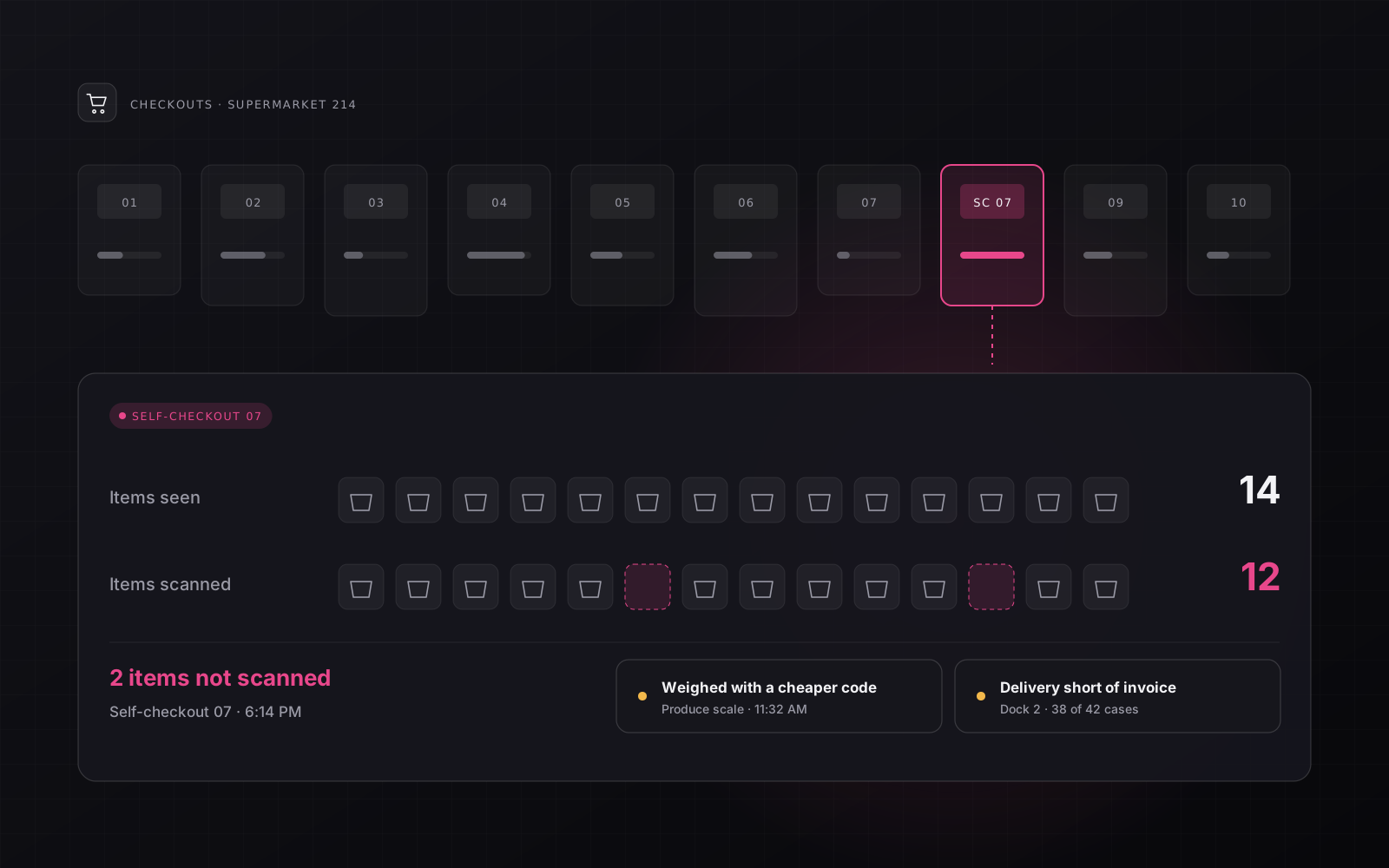
The agent is designed around the supermarket operation: dozens of checkouts, self-checkout, produce and bakery scales, the receiving dock and direct store delivery from suppliers. The reading ties every void, unscanned item, weighing and supplier invoice to what the camera showed at that moment.
Proof
Result data goes in once released by the client.
Each team reads supermarkets operations its own way.
Each unit's standard tracked without a site visit.
See teamLoss preventionPOS and operational fraud, with the transaction and the video together.
See teamInformation technologyIntegrates with the POS and current systems, in one reading.
See teamCustomer experienceQueue, occupancy and readiness measured in every unit.
See teamSolutions that matter in this vertical
Frequently asked questions
Which fraud types does Bewacher read in a supermarket?
Bewacher reads the fraud types that pass through checkout, self-checkout, the scales and the dock: voids after payment, unscanned items, label switching, improper discounts and supplier short deliveries. Each one is matched with the video from that moment and reaches the responsible team already validated.
Does it work with self-checkout and produce scales?
Yes. The agent compares what the video shows at the terminal and the scale with what was recorded: the item selected on screen, the weight read and the label code. When the two do not match, the store team gets the case with the transaction and the video clip.
What about direct store delivery from suppliers?
Yes, direct delivery follows the same reading. Each supplier invoice is matched with the unloading video and the dock time. A gap between the document and what physically arrived becomes a case for checking, before the shortage shows up in the inventory count.
Scale criteria
For mid-size and large chains. Size is confirmed in the qualification form.